
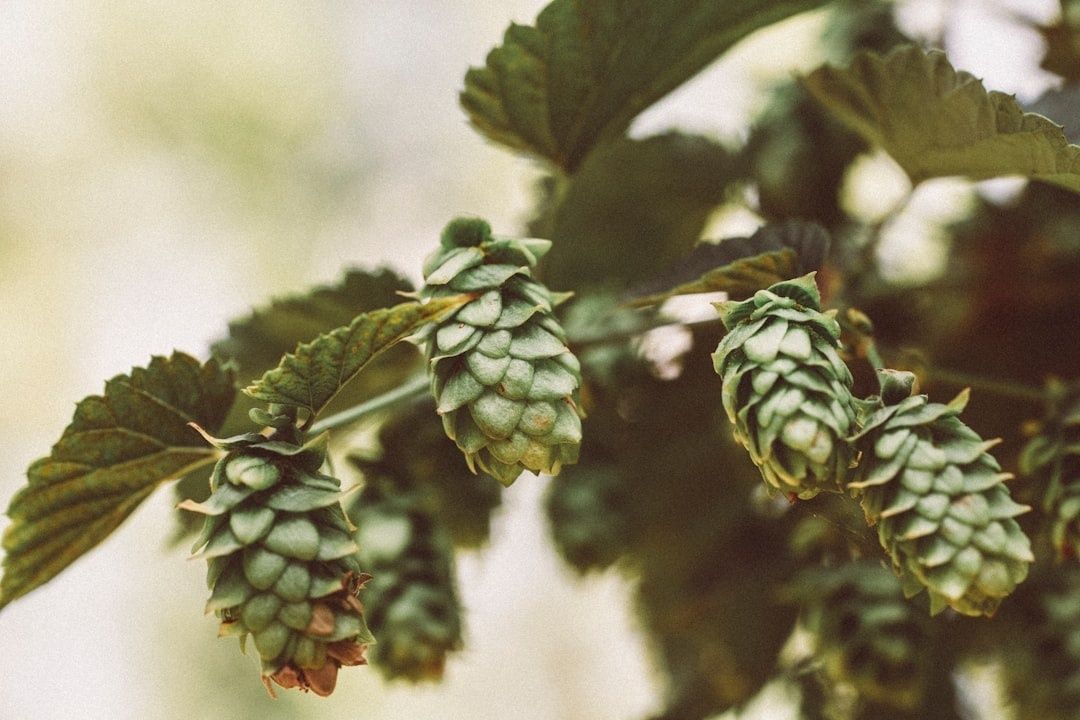
Beyond IBU Math to True Flavor Chemistry
Calculated IBUs are useful, but they are not a complete description of what lands in the glass. A recipe may predict the same bitterness from two different hop schedules, yet one beer tastes clean and firm while the other feels sharp, green, or rough. The gap comes from variables that a basic IBU estimate cannot fully capture, including wort gravity, boil vigor, hop age, whirlpool temperature, contact time, yeast interaction, and the way aroma compounds survive into packaging. For small-batch brewing, where a few ounces and a few degrees can materially change the result, timing is a flavor tool rather than a line item on a recipe sheet.
Hops carry two broad families of useful chemistry. Alpha acids such as humulone are the raw material for bitterness, becoming more soluble and more bitter through heat-driven isomerization. Essential oils, including myrcene, linalool, geraniol, humulene, and caryophyllene, provide citrus, floral, resinous, herbal, tropical, and spicy impressions. Those oils are volatile by nature. A rolling boil strips many of them away, while carefully managed post-boil and cellar additions can retain a much larger share. The practical objective is to separate jobs: use the kettle to build structured bitterness, then use cooler whirlpool and dry-hop stages to protect fresh aroma.
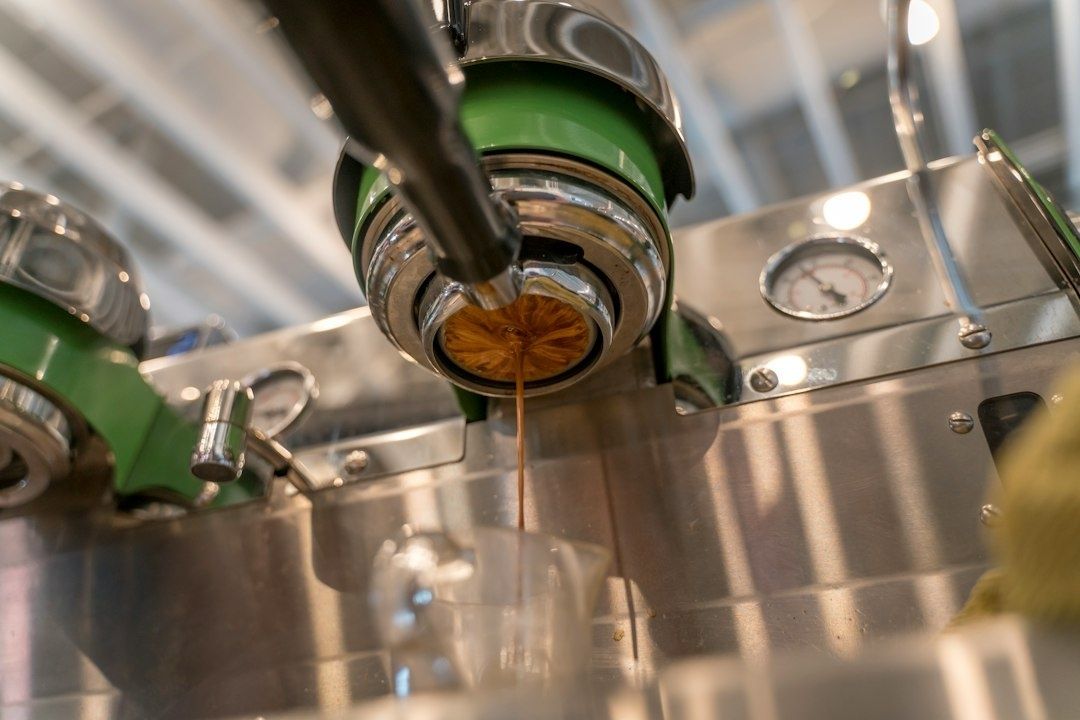
The Boiling Kettle and the Physics of Isomerization
During a vigorous boil, insoluble alpha acids from hop resins undergo a molecular rearrangement. Humulone and related compounds become iso-alpha acids, which are substantially more soluble in wort and produce the familiar bitterness of pale ales, IPAs, and other hop-forward beers. Isomerization is accelerated by high temperature and proceeds most efficiently early in the boil, although utilization gradually changes with wort gravity, pH, boil intensity, hop form, and time. This is why a conventional 60-minute addition remains a dependable foundation when the target is clean, measurable bitterness.
The same heat that drives isomerization works against delicate aroma. Myrcene, one of the most volatile major hop oils, can decline rapidly after exposure to a rolling boil, with practical brewing guidance placing substantial losses within roughly 10 to 15 minutes. Linalool and other volatile compounds also diminish, while fermentation later removes or transforms additional oil fractions. Essential oils form only a small portion of the hop cone, but they carry much of the variety-specific identity. The Oxford Companion to Beer describes hop oils as the principal aroma components of hops and notes that major terpenoids are generally lost during boiling.
Excessive exposure can create more than a lack of aroma. Long boiling may pull additional vegetal material and polyphenols into the wort, especially when large quantities of hops are held hot for extended periods. The resulting beer can taste coarse, grassy, or astringent rather than simply more bitter. A disciplined baseline schedule keeps the primary bittering charge at 60 minutes, uses a measured alpha-acid value, and avoids leaving late hops in near-boiling wort while the brewer searches for a chiller or transfer vessel.
- Use a 60-minute addition when a firm bitterness backbone is required.
- Reserve high-oil, expensive varieties for late kettle, whirlpool, or dry-hop use.
- Chill promptly after the intended boil and account for the hot time before the wort reaches the planned hop-stand temperature.
- Record actual wort temperature, hop mass, alpha-acid percentage, and contact time for repeatable batches.
Unlocking Saturated Aroma in the Sub-180 Whirlpool
A whirlpool or hop stand changes the job description of the kettle. Instead of driving maximum alpha-acid conversion, the brewer is trying to dissolve hop oils while reducing their escape through steam. Around 176°F to 180°F, or approximately 80°C to 82°C, isomerization falls dramatically compared with a rolling boil. It does not necessarily become mathematically zero, especially during the initial cooling period, but the bitterness contribution becomes far smaller and more predictable than it would be at boiling temperature. The result is a useful separation between bitterness and aroma.
Oil behavior is not uniform. Myrcene is highly volatile and can produce green, resinous, dank, or fresh citrus impressions depending on the variety and matrix. Linalool and geraniol are terpene alcohols associated with floral and citrus notes, while caryophyllene contributes woody, spicy, and peppery depth. The whirlpool hopping guide identifies 160°F to 170°F as a practical compromise for preserving oils while maintaining useful extraction. Lower temperatures reduce volatilization further, but oil solubility and diffusion slow down, so a longer stand or gentle circulation may be necessary.
| Post-boil temperature | Primary effect | Best practical use |
|---|---|---|
| 185°F to 210°F | More ongoing isomerization and greater volatile loss | Flavor and some bitterness when rapid chilling is not possible |
| 160°F to 180°F | Low bitterness with strong oil extraction | Balanced hop stands for saturated fruit and citrus |
| 150°F to 160°F | Minimal isomerization and reduced volatilization | Aroma-focused stands with longer contact and careful sanitation |
For a small batch, execute the hop stand as a controlled sequence. At flameout, begin chilling immediately and stir or recirculate safely until the wort reaches the chosen target, such as 165°F or 170°F. Add the measured hops, cover the kettle to limit steam-driven oil loss, and hold for 15 to 25 minutes. Avoid vigorous splashing, because hot wort readily absorbs oxygen and covered kettles can trap dimethyl sulfide if the wort was not adequately boiled. After the stand, resume chilling to pitching temperature without unnecessary delay. A 25-minute sensory comparison of hop stands at 192°F and 172°F did not produce a reliably detectable difference in one small trial, so temperature should be treated as a controllable variable to test, not a magic dividing line.
Cellar Science and Cold Ferment Dry Hopping
Dry hopping removes the hops from the thermal battlefield. At roughly 55°F to 60°F, hop material can release expressive terpene alcohols and other aroma compounds without the rapid evaporation associated with boiling. Cooler beer also tends to limit the aggressive extraction of some polyphenols compared with warmer, highly agitated contact. The result can be a brighter nose with less hop bite, though extraction still depends on hop dose, pellet or whole-cone form, beer composition, agitation, and vessel geometry.
Long contact is not automatically better. Research summarized in dry-hopping studies found that Cascade linalool and myrcene levels were not higher after seven days than after one day, and some compounds declined. Hydrocarbons and terpene alcohols can reach substantial extraction within hours when the beer is gently agitated, while an undisturbed vessel may require longer. A practical starting point is 24 to 48 hours, followed by sensory evaluation. If the beer already has the desired fruit, citrus, or floral lift, remove the hops rather than allowing additional vegetal and polyphenol extraction.
Late additions demand strict oxygen control. Oxygen introduced with loose pellets, an opened fermenter, or a poorly purged transfer can turn a vivid beer darker, sweeter, and cardboard-like over time. Purge the receiving vessel, minimize headspace disturbance, and use a closed transfer whenever the equipment permits. Hop creep adds another concern: enzymes from dry hops can break down dextrins into fermentable sugars, restarting fermentation and potentially raising attenuation, carbon dioxide production, and diacetyl risk. Give the beer time to stabilize before packaging, especially after a large late addition.
- Mid-fermentation dry hopping: yeast may transform geraniol and other compounds, potentially increasing citrus or soft fruit character, but yeast can also remove aroma through adsorption and fermentation-driven stripping.
- Post-fermentation dry hopping: the original hop profile is usually more predictable, with less yeast interaction, but oxygen management becomes more demanding.
- Short, cool contact: often protects freshness, foam, and drinkability better than a week-long warm soak.
- Agitation: accelerates extraction, but excessive swirling or recirculation can increase bitterness and astringency.
Mapping Temperature to Terpene Preservation
Each major compound behaves differently, and none should be treated as a complete explanation of hop character. Humulone needs heat to become iso-alpha acid, so it belongs primarily in the bittering plan. Myrcene is highly volatile and is easily lost during a long boil, although retained myrcene can contribute pungent, resinous, dank, or citrus impressions. Linalool is more persistent and is associated with floral and citrus character. Caryophyllene, a sesquiterpene found in hop oils and other plant essential oils, contributes spicy, woody, and pepper-like structure. Variety genetics, yeast metabolism, wort chemistry, and the combined oil matrix determine the final impression.
A dependable process uses temperature as a map rather than relying on addition names such as “flameout” or “dry hop.” A flameout charge left in 200°F wort for 30 minutes is chemically different from the same charge added after cooling to 165°F. Likewise, a dry hop held for one cool day is not equivalent to one held warm for a week. Build the schedule around the flavor target, then measure what the system actually does.
- Set the bitterness backbone with a measured 60-minute charge, keeping high-value aroma varieties out of the early boil.
- At flameout, begin cooling and record the time required to reach the selected whirlpool temperature.
- Add the whirlpool hops between 160°F and 180°F, hold for 15 to 25 minutes, and limit splashing while maintaining even contact.
- Choose mid-fermentation dry hopping for possible biotransformation, or wait until fermentation is complete for a cleaner, more predictable aroma.
- Start with 24 to 48 hours of cool dry-hop contact, taste carefully, and remove the hops when the nose is saturated.
- Allow hop creep and fermentation activity to settle before packaging, then transfer under carbon dioxide with minimal oxygen exposure.
Take Control of Your Kettle and Elevate Every Pint
Hop expression is a thermal trade-off. Boiling converts alpha acids into clean bitterness but drives off much of the volatile oil fraction. A controlled sub-180°F whirlpool protects more aroma while keeping bitterness restrained. Cold, short dry hopping then adds a fresh nose with less opportunity for harsh polyphenol extraction than a warm, extended soak. None of these stages works in isolation. Wort gravity, yeast strain, hop condition, agitation, oxygen exposure, and actual temperature all shape the finished beer.
Split batches make the learning precise. Hold the recipe constant while comparing a 170°F stand with a 185°F stand, or test 24-hour and 72-hour dry hops at the same beer temperature. Keep notes on aroma, bitterness quality, astringency, haze, foam, and fermentation behavior. Purposeful timing turns hops from a formulaic addition into a controllable instrument, allowing each small batch to deliver firm bitterness, layered mid-palate fruit, and a saturated aroma that remains clean from the first pour to the last.