
Why Two Degrees Decide the Fate of Your Pint
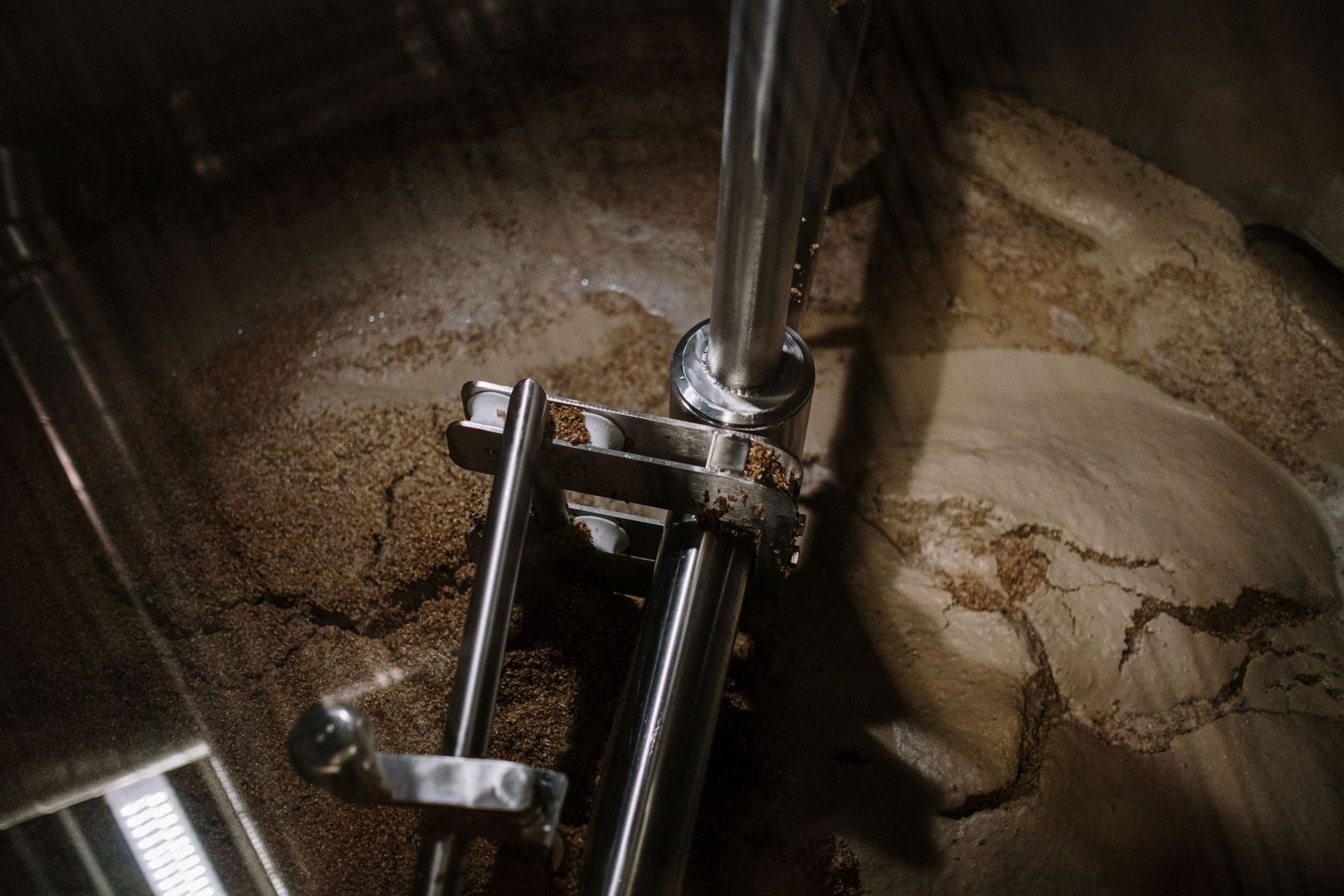
The mash tun is where a beer”s final shape begins to take form. Before the boil concentrates the wort, before hops bring bitterness and aroma, and before yeast determines attenuation, hot water is drawing character from crushed grain. That conversion rest helps decide whether the finished pint feels crisp and snappy, softly rounded, or dense enough to coat the tongue. A brewer searching for a reliable strike water calculator is not merely chasing a number. The goal is to control fermentability, residual sweetness, and body from the first major process step.
A shift of two to four degrees Fahrenheit can move the balance between fermentable sugars and dextrins enough to change the beer”s finish. That difference is especially noticeable in small batches, where a compact mash loses heat quickly and a few degrees represent a meaningful portion of the total thermal window. Treat mash temperature as a tactile throttle rather than dry laboratory theory. Turn it down for a lean, dry finish, or ease it upward for a fuller, sweeter texture, while keeping the rest of the process clean and controlled.
The Enzyme Tug of War Between Alpha and Beta Amylase
Mash temperature governs the working balance between two principal starch-converting enzymes. Beta-amylase attacks starch chains from their ends, removing maltose, a highly fermentable sugar that yeast can readily consume. Its useful working range is commonly placed around 131 to 150°F, although activity depends on time, mash pH, grist composition, and the exact malt being used. A lower rest, such as 148°F, generally favors a wort that ferments further, leaving a crisp finish with less residual sweetness and a lighter body.
Alpha-amylase behaves differently. It cuts starch chains at internal points, producing a mixture that includes fermentable sugars as well as larger dextrins. Its activity becomes more pronounced at roughly 154 to 162°F. Those larger molecules remain in the beer after fermentation and contribute to weight, softness, and a fuller impression on the palate. Higher rests can be useful for robust stouts, Scotch ales, and other beers where a rounded, warming texture matters more than maximum dryness. The tradeoff is lower apparent attenuation and a greater risk of a sweet or heavy finish if the recipe and yeast do not provide enough balance.
The practical meeting ground is often close to 152°F. This middle range allows beta-amylase to remain productive while alpha-amylase builds enough dextrin structure to prevent the beer from tasting hollow. A single infusion around 150 to 153°F is therefore a dependable starting point for many pale ales, amber ales, and balanced lagers. The mash should not be treated as a switch with a single guaranteed outcome. Rest duration, mash thickness, pH, base malt modification, yeast strain, and fermentation temperature all influence the final result.
| Mash rest | Typical wort character | Useful applications |
|---|---|---|
| 148 to 150°F | Highly fermentable, dry, lighter body | Pilsners, pale ales, IPAs, session beers |
| 151 to 153°F | Balanced attenuation and mouthfeel | Amber ales, porters, balanced lagers |
| 154 to 158°F | Fuller, sweeter, less fermentable | Stouts, Scotch ales, strong malt-forward beers |
Step mashing can widen the range of control, but it also introduces more opportunities for stratification and heat loss. A Hochkurz-style schedule, with a beta-oriented rest near 142°F followed by an alpha-oriented rest near 158°F, can produce fermentable wort with additional body, particularly in some lager formulations. For most small-batch systems, however, a well-executed single infusion is easier to repeat and often delivers equally sound beer. Consistency matters more than complexity when the equipment does not support precise recirculation and uniform heating.
Hitting the Numbers with Strike Water Calculations and Thermal Mass
Crushed grain is not neutral equipment. It arrives cooler than the intended mash and absorbs a substantial amount of heat as the kernels hydrate. The mash tun also draws energy into its walls, false bottom, tubing, and lid. Strike water must therefore be hotter than the desired resting mash temperature. Pouring water at the target temperature into cold grain will almost always create an under-temperature dough-in.
A useful starting formula expresses the relationship between water-to-grain ratio, grain temperature, target mash temperature, and equipment loss as follows: Strike Temperature = ((0.2 divided by R) multiplied by (Target minus Grain)) plus Target plus Equipment Loss. Here, R is the water-to-grain ratio in quarts per pound. A thicker mash requires hotter strike liquor because there is less water available to absorb and distribute heat. A full-volume brew-in-a-bag mash, often around 2.0 to 3.0 quarts per pound, generally needs a smaller temperature correction than a stiff traditional mash.
- Measure the grain temperature. Do not assume the grain is at room temperature, especially after storage in a garage, basement, or cool shed.
- Preheat the mash tun. Add hot liquor, close the lid for several minutes, then discard or account for that water before dough-in. This reduces the vessel”s heat demand.
- Heat strike liquor slightly above the calculated value. Include a realistic equipment-loss allowance, commonly 2 to 5°F for a cold or lightly insulated tun.
- Add water and grain in alternating portions. Stir continuously as grain falls into the liquor. This breaks apart clumps before they become compact grain balls.
- Stir aggressively but deliberately for the first two minutes. Scrape the corners and bottom, where dry pockets and cooler zones hide.
- Close the vessel and wait several minutes before the final reading. Take temperature samples from multiple locations, then make a small correction if the readings are genuinely off target.
The first measurement can mislead. A probe held near the surface may read warmer than the center, while a thermometer touching the tun wall may register the vessel rather than the mash. Stir thoroughly, take readings at the top, middle, and bottom, and use the average. A stable equilibrium temperature after five minutes is more useful than a hurried reading taken while dry grain is still being hydrated.
For repeatable brewing, record grain weight, grain temperature, liquor volume, strike temperature, mash temperature at dough-in, and temperature after 10 and 60 minutes. That simple log reveals how a particular cooler, kettle, or bag system behaves. Calculators provide a sound starting point, but a brewer”s own loss profile eventually becomes more valuable than a generic estimate.
Defending Against Mash Tun Heat Loss in Small Systems
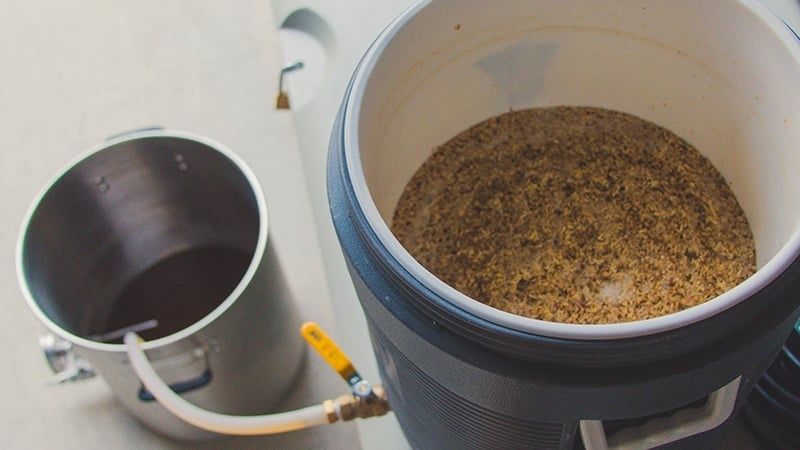
A five-gallon batch can lose heat faster than a commercial mash because its volume is small relative to the exposed surface area. A broad kettle or cooler may present a large lid and wall area to a relatively modest amount of mash. Thin metal, an unsealed lid, cold plumbing, and frequent opening can turn a carefully calculated 152°F mash into a 147°F rest before conversion is complete.
Protection begins before the grain enters the vessel. Preheating the mash tun reduces the initial thermal shock, while a fitted lid and external insulation slow heat movement during the rest. A folded blanket or purpose-built insulation jacket can help, provided it stays dry and clear of burners, electrical elements, and hot surfaces. Keep the mash tun sheltered from cold drafts, and avoid lifting the lid merely to admire the grain bed. Every opening releases a pocket of hot air that must be rebuilt.
- Preheat the vessel with hot liquor before dough-in.
- Use a tight-fitting lid and add safe external insulation where needed.
- Stir only when the process requires it, then close the vessel promptly.
- Measure in more than one location to identify temperature stratification.
- Log the temperature drop from dough-in to the end of the rest for future batches.
A small drop, perhaps one or two degrees over an hour, is usually not worth chasing. The enzymes have already been working across a range, and opening the vessel repeatedly can create more instability than the temperature loss itself. Correct a larger deviation when it is likely to alter the beer”s intended fermentability. A carefully calculated boiling-water infusion can raise the mash, but it also dilutes the grist and changes the water balance. Add boiling liquor slowly while stirring thoroughly, measure again, and avoid scorching the grain bed.
Direct heat and recirculation can correct temperature, but both require discipline. Direct-fired systems can create hot spots at the bottom, while a BIAB bag may insulate the grain from the kettle wall and develop uneven zones. If using an element or burner, lift or stir safely according to the equipment design. In many small setups, insulation plus a well-mixed initial rest is the sturdier solution.
Troubleshooting Cloying Heaviness and Watery Thin Pints
A heavy, sweet beer often begins with an unexpectedly warm mash, but mash temperature is only one suspect. A thermometer can drift, especially after repeated exposure to boiling liquor, and a probe may be reading a hot pocket rather than the mash average. High proportions of crystal malt, Munich malt, or other dextrin-building ingredients can also increase body and sweetness. Yeast health, pitching rate, oxygenation, fermentation temperature, and mash pH determine how much of the available sugar is ultimately consumed.
When a beer finishes too sweet, compare the original process log with the recipe design. A session pale ale may benefit from a 148 to 151°F rest, a restrained crystal percentage, and a clean, adequately attenuative yeast. An imperial stout may intentionally rest around 154 to 157°F, supported by roasted grain, alcohol warmth, and a dense malt bill. Raising or lowering mash temperature cannot fully compensate for a recipe built in the opposite direction. Body comes from the combined structure of grist, mash, yeast, alcohol, carbonation, and serving temperature.
- Cloying sweetness: Check thermometer calibration, mash temperature, yeast attenuation, fermentation temperature, and the amount of crystal or dextrin malt.
- Watery texture: Check for an overly low mash, excessive dilution, very high attenuation, low alcohol strength, or insufficient malt structure.
- Unexpectedly low efficiency: Look for dough balls, poor crush, inadequate stirring, incorrect liquor volume, or a mash that never reached a stable conversion temperature.
- Harsh dryness or astringency: Investigate mash pH and sparging practices rather than blaming mash temperature alone.
If fermentation is still active, patience is the first correction. Confirm gravity with sanitized equipment over several days before making changes. If gravity remains high and the beer is otherwise healthy, gently warming the fermenter within the yeast”s recommended range may encourage completion. A carefully selected, actively fermenting yeast addition can sometimes help, but it should not be used as a substitute for diagnosis. Check sanitation, oxygen exposure, and the original yeast strain before repitching.
Once the beer is finished, options become more limited. Blending with a drier, lower-gravity beer can restore balance, though it requires tasting trials in measured samples. Carbonation can sharpen perception and reduce the impression of heaviness, while serving the beer slightly cooler can make sweetness feel less dominant. These are salvage measures, not replacements for process control. The next batch should begin with a calibrated thermometer and a clear record of the actual mash curve.
Take Command of Your Kettle on Your Next Brew Day
Calibrate mash thermometers before heating strike liquor. An ice-water check should read close to 32°F, and a boiling-water check should be interpreted according to elevation and local atmospheric pressure. If a probe is several degrees off, every recipe temperature has been quietly misreported. Replace unreliable equipment rather than trying to remember a correction under the pressure of dough-in.
Track the thermal behavior of the brewhouse across several batches. Note the grain temperature, strike liquor temperature, dough-in reading, temperature after five minutes, and final rest temperature. Soon the equipment”s habits become familiar: the cooler that loses two degrees, the kettle that stratifies, or the bag system that needs an extra stir. Use that knowledge as a deliberate flavor throttle. Lower rests can build a clean, dry finish, while higher rests can give malt-forward beers the sturdy body they need. The craft is not in chasing a magical number. It is in controlling the variables well enough to make the exact pint intended.